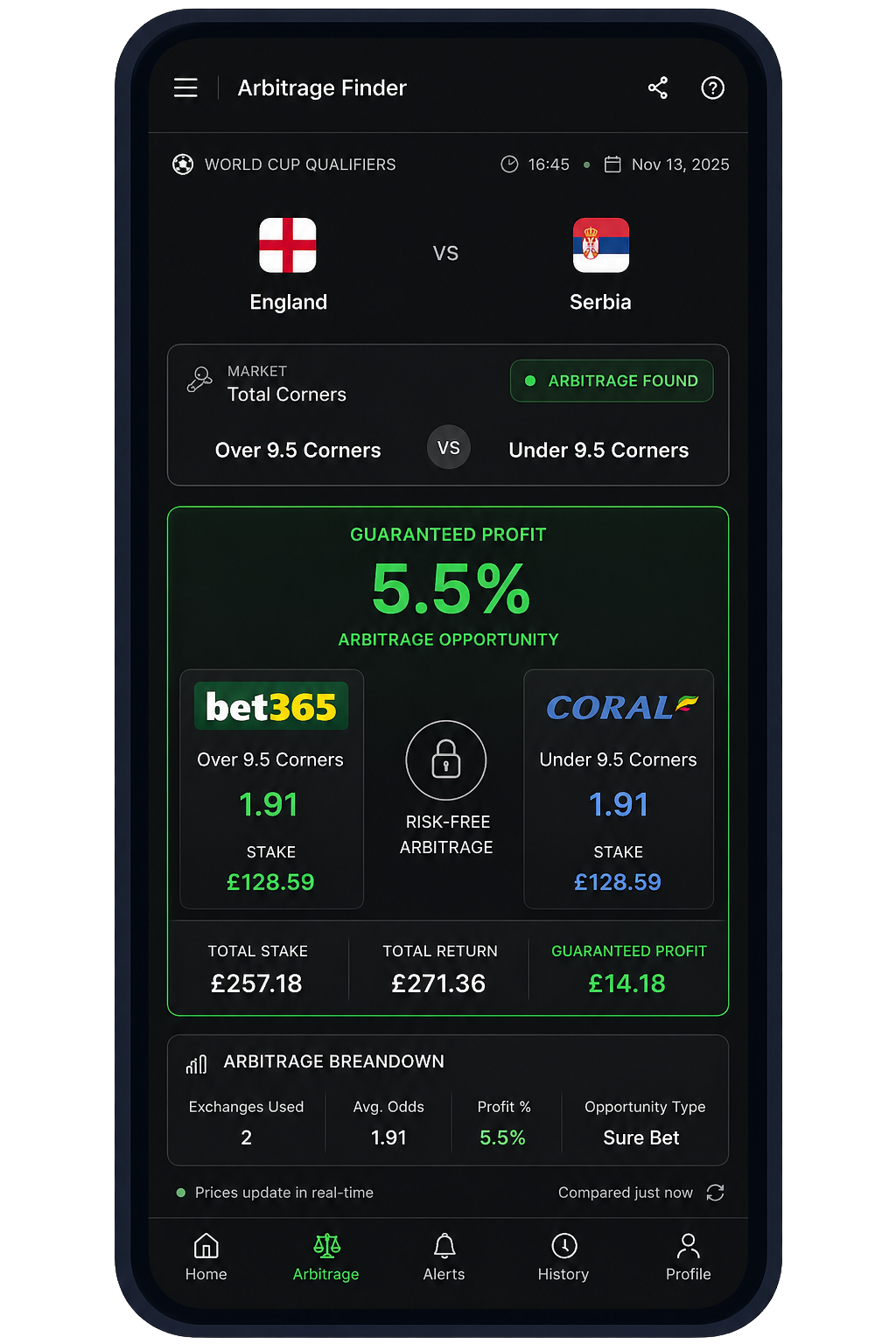
Building applications that leverage specific football markets requires precise data. A cards betting API delivers exactly that: structured, pre-match odds for yellow and red card markets in football fixtures. For developers, this means programmatic access to crucial data points without the headaches of web scraping.
Integrating a reliable cards betting API allows you to power sophisticated betting models, build niche odds comparison tools, or enhance sports analytics platforms. Instead of wrestling with inconsistent website layouts and IP bans, you get clean JSON data directly from UK bookmakers. This guide will explain how such an API works and how to integrate it into your projects.
What is a Cards Betting API?
A cards betting API provides programmatic access to pre-match odds related to yellow and red cards in football matches. These markets are distinct from traditional match outcomes or goal totals. They focus specifically on player discipline, offering odds for events like total cards in a match, specific players to be carded, or card handicaps.
The data delivered by a cards betting API is typically in a standardised JSON format. This makes it easy for developers to parse and integrate into their applications. Unlike "live" or "in-play" odds, which update during a match, a cards betting API focuses on the prices available before kickoff. These pre-match football odds JSON feeds are crucial for building models that predict disciplinary events based on historical data, team form, or referee statistics. It's a specialised segment of the broader sports betting data landscape, offering granular detail for those who need it.

How a Cards Betting API Works
At its core, a cards betting API functions like any other RESTful API. You send authenticated HTTP requests to specific endpoints, and the API returns structured JSON responses. The process typically involves two main steps: first, discovering upcoming football events, and then requesting the specific card markets and their odds for a chosen event.
For example, to find events with available odds, you might query an endpoint like /v1/football/events. Once you have an event_id, you can then request the odds for that specific match, filtering for card-related markets. This approach ensures you only pull the data you need, optimising your requests and staying within rate limits.
Here’s how you might fetch upcoming football events with available odds using a GET request:
curl -X GET "https://api.ukoddsapi.com/v1/football/events?schedule_date=2026-04-25&has_odds=true&per_page=1" \
-H "X-Api-Key: YOUR_API_KEY"
This curl command requests one football event scheduled for April 25, 2026, that has odds available. The response will include an event_id which is essential for fetching specific market odds.
{
"schema_version": "1.0",
"count": 1,
"events": [
{
"event_id": "EVT00000000000000000001",
"league_name": "Premier League",
"home_team": "Manchester United",
"away_team": "Liverpool",
"kickoff_utc": "2026-04-25T15:00:00Z",
"markets_with_odds": ["main", "goals", "cards"],
"unique_bookmaker_codes": ["UO001", "UO027"]
}
],
"note": "Example only — response is truncated."
}
The response provides key details about the event, including its event_id and a markets_with_odds array, which confirms that cards markets are available for this fixture. With this event_id, you can then proceed to fetch the detailed odds for the card markets. This modular approach allows for efficient data retrieval.
Why Cards Betting Data Matters for Developers
For developers building sophisticated sports betting tools, access to granular data like pre-match card odds is invaluable. It opens doors to several advanced applications that go beyond simple match winner predictions. A robust UK bookmaker odds API covering these niche markets can be a game-changer.
- Advanced Prediction Models: Card data allows for the development of machine learning models that predict player bookings or total match cards. These models can factor in referee statistics, team disciplinary records, and player-specific data, leading to more nuanced predictions.
- Niche Odds Comparison Tools: While many sites compare match winner odds, fewer focus on specific markets like cards. Developers can build unique odds API without scraping comparison platforms, attracting users interested in these specialised bets.
- Data-Driven Content & Analytics: For affiliate sites or sports analytics platforms, integrating card data can provide unique insights and content. Visualising trends in card counts or highlighting value in specific card markets can drive engagement.
- Arbitrage and Value Betting: With access to multiple bookmakers' pre-match card odds, developers can programmatically identify arbitrage opportunities or value bets where discrepancies exist across different platforms. This requires fast, reliable data that scraping often fails to provide consistently.
The ability to programmatically access this data, rather than relying on manual checks or fragile scraping scripts, ensures consistency, speed, and scalability for any data-intensive application.
Integrating a Cards Betting API into Your Application
Integrating a cards betting API into your application means moving beyond manual data collection or unreliable scraping. You'll typically use a standard HTTP client in your chosen programming language to make requests to the API endpoints. For this example, we'll use Python, a common choice for data-driven applications.
The process involves authenticating your requests with an API key, fetching a list of relevant football events, and then drilling down to retrieve the specific card market odds for an event. This structured approach ensures you get the pre-match football odds JSON you need efficiently.
Here's a Python example demonstrating how to fetch card odds for a specific event:
import os
import requests
# Set your API key from environment variables
API_KEY = os.environ.get("UKODDSAPI_KEY", "YOUR_API_KEY")
BASE_URL = "https://api.ukoddsapi.com"
headers = {"X-Api-Key": API_KEY}
# Step 1: Find an event with card markets
# For demonstration, we'll use a known event ID.
# In a real application, you'd fetch events first using /v1/football/events
# and then select an event_id from the response.
# Example event_id (replace with a real one from /v1/football/events)
event_id = "EVT00000000000000000001" # This is a placeholder, get a real one!
print(f"Fetching card odds for event_id: {event_id}")
# Step 2: Fetch odds for the specific event, requesting 'full' package for advanced markets
# Card markets are typically part of the 'full' package.
odds_response = requests.get(
f"{BASE_URL}/v1/football/events/{event_id}/odds",
headers=headers,
params={"package": "full", "odds_format": "decimal"},
timeout=60,
)
odds_response.raise_for_status() # Raise an exception for HTTP errors
odds_data = odds_response.json()
# Step 3: Parse and display card market odds
if odds_data and "markets" in odds_data:
print(f"Event Title: {odds_data.get('event_title')}")
print(f"Kickoff: {odds_data.get('kickoff_utc')}")
card_markets_found = False
for market in odds_data["markets"]:
if market.get("market_group") == "cards":
card_markets_found = True
print(f"\nMarket: {market.get('market_name')} (ID: {market.get('market_id')})")
for selection in market["selections"]:
bookmaker_name = next(
(bm["name"] for bm in requests.get(f"{BASE_URL}/v1/bookmakers", headers=headers).json()["bookmakers"] if bm["bookmaker_code"] == selection["bookmaker_code"]),
selection["bookmaker_code"]
)
print(f" Selection: {selection.get('selection_name')} - Odds: {selection.get('odds')} ({bookmaker_name})")
if not card_markets_found:
print("No 'cards' markets found for this event with the 'full' package.")
else:
print("Could not retrieve odds data or no markets found.")
This Python code first sets up your API key and base URL. It then makes a GET request to the /v1/football/events/{event_id}/odds endpoint, specifying package=full to ensure access to advanced markets like cards. After receiving the JSON response, it iterates through the markets array, specifically looking for those with a market_group of cards. For each card market, it prints the selections and their corresponding odds from various bookmakers. Remember to replace "YOUR_API_KEY" with your actual key and "EVT00000000000000000001" with a real event_id you've fetched from the /v1/football/events endpoint.

Common Mistakes When Working with Cards Betting Data
Integrating a cards betting API can streamline your development, but it's easy to run into common pitfalls. Understanding these can save you debugging time and ensure your application remains robust.
- Ignoring API Rate Limits: Making too many requests too quickly will lead to temporary blocks. Always implement proper rate limiting and backoff strategies in your code. Check the API's documentation for specific limits per tier.
- Misinterpreting Market Availability: Not all bookmakers offer card markets for every single fixture, especially lower-league games. Your application should gracefully handle cases where card markets are absent for a given
event_id. - Confusing Pre-Match with In-Play: UK Odds API provides pre-match data. Do not build an application expecting real-time, in-play card odds updates from this API. "Live" in this context refers to fresh pre-match snapshots, not odds that change during a match.
- Not Specifying the Correct Package: Advanced markets like cards are often part of higher-tier API packages (e.g.,
package=fullon ukoddsapi.com). If you're on a basic plan or don't specify the correct package parameter, you might not receive the card market data you expect. - Inadequate Error Handling: Network issues, invalid
event_ids, or expired API keys can all lead to errors. Implement robusttry-exceptblocks and check HTTP status codes to catch and handle these gracefully. - Over-reliance on a Single Bookmaker: Odds for card markets can vary significantly between bookmakers. To get a comprehensive view or find the best prices, you need to aggregate data from multiple sources.
Comparison / Alternatives for Cards Betting Data
When you need pre-match football odds JSON, especially for niche markets like cards, developers have several options. Each comes with its own set of tradeoffs in terms of effort, reliability, and cost. Understanding these alternatives helps you choose the right path for your project.
| Feature / Method | Managed API (e.g., ukoddsapi.com) | Self-Scraping (Custom Script) | Manual Data Entry (Small Scale) |
|---|---|---|---|
| Reliability | High (dedicated infrastructure) | Low (prone to breakage) | Medium (human error) |
| Effort to Setup | Low (API key, simple requests) | High (coding, proxy management) | High (time-consuming) |
| Ongoing Maintenance | Low (API provider handles changes) | High (constant adaptation) | High (continuous input) |
| Data Quality | High (normalised, consistent) | Variable (depends on script) | Variable (depends on attention) |
| Market Coverage | Broad (multiple bookmakers) | Limited (one site at a time) | Very limited |
| Cost | Subscription fee | Server, proxies, dev time | Human labour cost |
A managed API offers a significant advantage by abstracting away the complexities of data collection, normalisation, and maintenance. While self-scraping might seem free initially, the hidden costs in developer time and ongoing fixes often outweigh the benefits. For serious projects requiring consistent, reliable UK bookmaker odds API data, a dedicated API is the most efficient and scalable solution.
FAQ
What kind of card markets are typically available via an API?
Common card markets include Total Cards (Over/Under a specific number), Player to be Carded (Yes/No), Team Total Cards, and Card Handicaps. Availability can vary by bookmaker and API package.
How often are card odds updated?
Pre-match card odds are typically updated periodically by bookmakers leading up to kickoff. A reliable API provides refreshed snapshots of these pre-match prices, but it does not offer real-time, in-play updates during a match.
Can I get historical cards betting data?
Some API providers, including ukoddsapi.com on higher tiers, offer access to historical odds data for cards markets. This is crucial for backtesting prediction models and conducting in-depth analytics.
What if a bookmaker doesn't offer card markets for an event?
If a bookmaker doesn't offer card markets for a specific event, their odds for those markets will simply not appear in the API response. Your application should be designed to handle these cases gracefully, perhaps by falling back to other bookmakers or displaying "N/A."
Is a cards betting API suitable for in-play betting?
No, ukoddsapi.com specifically provides pre-match football odds. This means odds for scheduled fixtures before the match starts. For in-play (or "live") betting, you would need a different type of API that provides real-time updates during a match.
Conclusion
Accessing reliable pre-match football odds JSON for specific markets like cards is a fundamental requirement for many data-driven applications. A dedicated cards betting API streamlines this process, providing structured data directly from numerous UK bookmakers without the inherent fragility and maintenance burden of web scraping. By leveraging such an API, developers can focus on building innovative tools, confident in the quality and consistency of their data feed.
Ready to integrate pre-match football odds into your project? Explore the API documentation and get started with UK Odds API.