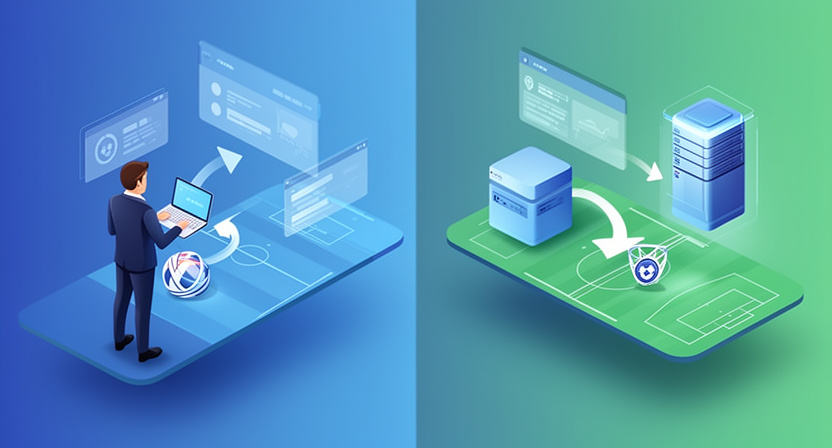
Choosing between a REST vs WebSocket for odds APIs can feel like picking the right tool for a job you haven't fully defined yet. Both protocols move data, but they do it differently. For pre-match football odds, understanding these differences dictates how fresh your data is, how much load your system handles, and how complex your integration becomes.
The core decision boils down to your need for data freshness and the nature of the odds data itself. While WebSockets excel at pushing real-time, sub-second updates, REST APIs are often more straightforward for retrieving snapshots of data at regular intervals. For pre-match football odds JSON, where updates typically occur every few minutes rather than every second, a well-designed REST API can be both efficient and reliable, providing an effective odds API without scraping.
What is a REST API for Odds Data?
A REST API operates on a request-response model. Your application sends a request to a specific endpoint, and the server responds with the requested data. This is a stateless process: each request from the client to the server contains all the information needed to understand the request. The server doesn't store any client context between requests.
For odds data, this means you "poll" the API. You ask for the odds for a specific match or a list of matches, and the API sends back a snapshot of the current pre-match prices. This approach is robust and widely understood, making REST vs WebSocket for odds APIs integration simpler for many developers.
Here’s how you might fetch pre-match football events and their odds using a REST API like ukoddsapi.com:
import os
import requests

API_KEY = os.environ.get("UKODDSAPI_KEY", "YOUR_API_KEY") # Use environment variable or placeholder
BASE = "https://api.ukoddsapi.com"
headers = {"X-Api-Key": API_KEY}

# Fetch upcoming football events with odds
events_response = requests.get(
    f"{BASE}/v1/football/events",
    headers=headers,
    params={"schedule_date": "2026-04-25", "has_odds": "true", "per_page": "1"},
    timeout=30,
)
events_data = events_response.json()

if events_data and events_data["events"]:
    event_id = events_data["events"][0]["event_id"]
    print(f"Fetched event ID: {event_id}")

    # Now fetch odds for that specific event
    odds_response = requests.get(
        f"{BASE}/v1/football/events/{event_id}/odds",
        headers=headers,
        params={"package": "core", "odds_format": "decimal"},
        timeout=60,
    )
    odds_data = odds_response.json()
    print(f"Odds for {odds_data.get('event_title')}:")
    for market in odds_data.get("markets", []):
        if market["market_name"] == "Match Winner":
            for selection in market["selections"]:
                print(f"  {selection['selection_name']}: {selection['odds']} (Bookmaker: {selection['bookmaker_code']})")
else:
    print("No events found with odds for the specified date.")
This Python snippet first retrieves a list of events scheduled for a specific date, then uses an event_id to pull the detailed odds for that event. The response is standard pre-match football odds JSON, easy to parse and integrate into any application.
{
  "schema_version": "1.0",
  "event_id": "EVT123456",
  "event_title": "Manchester United vs Liverpool",
  "kickoff_utc": "2026-04-25T15:00:00Z",
  "markets": [
    {
      "market_id": "MKT001",
      "market_name": "Match Winner",
      "selections": [
        { "selection_name": "Manchester United", "odds": 2.50, "bookmaker_code": "UO001" },
        { "selection_name": "Draw", "odds": 3.40, "bookmaker_code": "UO001" },
        { "selection_name": "Liverpool", "odds": 2.80, "bookmaker_code": "UO001" }
      ]
    }
  ],
  "note": "Example only — response is truncated for brevity."
}
What is a WebSocket API for Odds Data?
A WebSocket API establishes a persistent, full-duplex communication channel between a client and a server. Once the connection is open, both client and server can send messages to each other at any time, without the overhead of re-establishing a connection for each message. This is a stateful protocol, meaning the server maintains information about the client's connection.
For odds data, WebSockets are ideal for scenarios requiring real-time, low-latency updates. Think in-play betting, where odds can change every few seconds based on events in the match. A WebSocket feed would push new odds to your application as soon as they become available, without you having to ask for them.
While ukoddsapi.com focuses on pre-match odds delivered efficiently via REST, a conceptual WebSocket flow for odds might look like this:
- Client connects to a WebSocket endpoint.
- Client subscribes to specific events or markets.
- Server pushes odds updates for subscribed items as they occur.
This push model reduces network overhead and latency compared to frequent polling, but it also introduces more complexity in client-side state management and connection handling. For UK bookmaker odds API integrations, it's crucial to distinguish if you need this sub-second "live" data or if refreshed pre-match snapshots are sufficient.

Why Your Choice Matters for UK Bookmaker Odds API Integration
The decision between REST vs WebSocket for odds APIs is not about which is inherently "better," but which is better for your specific use case. For pre-match data, where odds don't typically fluctuate every second, REST often provides a more robust and manageable solution.
Consider these factors:
- Data Freshness Requirements: If you need odds that update every second (e.g., for in-play trading), WebSockets are the clear winner. If you need odds that update every few minutes or on a schedule (e.g., for pre-match comparison sites or arbitrage detection), REST polling is usually sufficient and simpler.
- Complexity: REST APIs are generally easier to implement and debug due to their stateless nature and widespread tooling. WebSockets require more sophisticated client-side logic for connection management, error handling, and message parsing.
- Resource Usage: Frequent REST polling can consume more server resources (and hit rate limits faster) if not managed well. However, maintaining many open WebSocket connections also has its own overhead. For pre-match football odds JSON, a sensible polling interval with REST is often more efficient than a constant WebSocket stream that mostly sends redundant data.
- Rate Limit Impact: With REST, you control when you make requests, allowing you to manage your rate limit usage directly. With WebSockets, data is pushed, so while you don't make explicit requests, the volume of data can still be a factor in API usage limits.
- Scalability: Both can scale, but differently. REST scales horizontally by adding more stateless servers. WebSockets require stateful connection management, which can be more complex to scale for a very high number of concurrent connections.
For building an odds comparison website or an arbitrage finder focused on pre-match data, you typically need the freshest available odds before kickoff. A REST API that provides updated snapshots every few minutes or on demand is perfectly suited for this. Trying to force a WebSocket solution onto pre-match data can be an over-engineering trap.
Common Mistakes When Integrating Odds APIs
Developers often fall into similar pitfalls when integrating with odds APIs. Avoiding these can save you significant time and headaches.
- Polling Too Aggressively: With a REST API, making requests too frequently will quickly exhaust your rate limits. For pre-match data, polling every few seconds is often unnecessary and inefficient. Understand the actual update frequency of the data you need.
- Confusing "Live" with "Pre-Match": Many developers use "live odds" when they mean "fresh pre-match odds." True "live" or "in-play" odds update during a match. UK Odds API provides pre-match odds. Ensure your application's requirements align with the API's data type.
- Ignoring Rate Limits: Every API has limits. Failing to implement proper back-off strategies and respecting
Retry-Afterheaders will lead to your IP being blocked. Read the API documentation carefully. - Not Handling Data Normalisation: Bookmakers present odds data in various formats. A good UK bookmaker odds API like ukoddsapi.com normalises this data into a consistent JSON structure. If you're scraping or using multiple raw feeds, you'll need to build this normalisation yourself.
- Over-Engineering for Pre-Match Data: Using WebSockets for data that only updates every 5-10 minutes is often overkill. The added complexity of managing persistent connections and processing a continuous stream might not justify the marginal benefit for pre-match scenarios.
REST vs WebSocket for Odds APIs: A Practical Comparison
Here's a breakdown of how REST and WebSocket stack up when considering odds API without scraping for pre-match data.
| Feature / Criterion | REST API (e.g., ukoddsapi.com) | WebSocket API (Conceptual for Odds) |
|---|---|---|
| Data Freshness | Pulls snapshots on demand (e.g., every 1-5 minutes for pre-match). | Pushes updates in real-time (sub-second latency). |
| Complexity | Simpler to implement, debug, and scale. Stateless. | More complex client-side logic for connection/state management. Stateful. |
| Resource Usage | Higher per-request overhead, but efficient for infrequent updates. | Lower per-message overhead, but persistent connection consumes resources. |
| Rate Limit Impact | Direct control over request frequency. Manageable with smart polling. | Data volume can impact usage limits, less direct control over "requests". |
| Typical Use Case | Pre-match odds comparison, arbitrage, historical data, scheduled updates. | In-play betting, low-latency trading, real-time dashboards. |
| ukoddsapi.com Approach | Primary method for pre-match football odds. Reliable, scalable polling. | Not offered for pre-match data, as REST is more suitable. |

For most developers building applications around pre-match football odds JSON, a robust REST API is the more pragmatic choice. It offers a good balance of data freshness, ease of integration, and resource efficiency.
How ukoddsapi.com Delivers Pre-Match Football Odds via REST
ukoddsapi.com is built specifically for pre-match football odds using a RESTful architecture. We focus on providing comprehensive coverage of UK bookmaker odds API data, normalised and easy to consume. This means you get consistent JSON responses across all bookmakers and markets, eliminating the need for complex scraping setups or custom parsers.
Our REST endpoints allow you to fetch:
- A list of all supported bookmakers.
- Upcoming football events for a given date.
- Detailed odds for specific events and markets.
- Best prices across all bookmakers for a selection.
This approach ensures you always have access to fresh pre-match data without the headaches of managing a continuous, high-volume WebSocket stream that might be overkill for your needs. You can poll our API at intervals that suit your application's requirements and your plan's rate limits, ensuring you get the data you need efficiently.
Here's an example of fetching the best odds for a specific event using ukoddsapi.com:
import os
import requests

API_KEY = os.environ.get("UKODDSAPI_KEY", "YOUR_API_KEY")
BASE = "https://api.ukoddsapi.com"
headers = {"X-Api-Key": API_KEY}

# Assume you have an event_id from a previous /v1/football/events call
# For this example, we'll use a placeholder event_id
example_event_id = "EVT123456" # Replace with a real event_id from /v1/football/events

best_odds_response = requests.get(
    f"{BASE}/v1/football/events/{example_event_id}/odds/best",
    headers=headers,
    params={"odds_format": "decimal"},
    timeout=60,
)
best_odds_data = best_odds_response.json()

if best_odds_data:
    print(f"Best odds for {best_odds_data.get('event_title')}:")
    for market in best_odds_data.get("markets", []):
        print(f"  Market: {market['market_name']}")
        for selection in market["selections"]:
            print(f"    {selection['selection_name']}: {selection['odds']} (Bookmaker: {selection['bookmaker_code']})")
else:
    print(f"Could not retrieve best odds for event ID: {example_event_id}")
This snippet demonstrates how simple it is to get the best available pre-match prices from various bookmakers. It's a direct, efficient way to integrate UK bookmaker odds API data into your application.
FAQ
Can I get real-time in-play odds via REST?
While technically possible to poll a REST API very frequently for in-play odds, it's inefficient and will quickly hit rate limits. REST is not designed for sub-second, real-time updates. WebSockets are better suited for true in-play data.
Is REST always slower than WebSocket for odds?
For truly real-time, sub-second updates, WebSockets are faster due to their persistent connection. However, for pre-match odds that update every few minutes, a well-implemented REST API with sensible polling intervals can deliver data with sufficient freshness and often with less overall complexity.
What are the rate limits for a REST odds API?
Rate limits vary by API and plan. For ukoddsapi.com, the Free plan offers 300 requests/month, while paid plans provide requests per hour (e.g., 1,000 requests/hour for Starter, up to 20,000 requests/hour for Business). Always check the specific API's documentation for exact limits.
Does ukoddsapi.com offer a WebSocket feed?
ukoddsapi.com currently focuses on providing comprehensive pre-match football odds via its REST API. This approach is highly effective for the typical update frequency of pre-match data, offering reliability and ease of integration for UK bookmaker odds.
When should I choose REST over WebSocket for pre-match data?
Choose REST when your primary need is refreshed snapshots of pre-match odds, rather than continuous sub-second updates. REST is simpler to implement, easier to scale for many users, and more suitable for applications like odds comparison sites, arbitrage finders, or data analysis where updates every few minutes are acceptable.
Deciding between REST vs WebSocket for odds APIs comes down to your specific data freshness requirements. For pre-match football odds JSON and building applications that need reliable, up-to-date UK bookmaker odds API data without the hassle of scraping, a well-designed REST API is often the most practical and efficient choice. If you're building with pre-match data in mind, ukoddsapi.com offers a robust REST solution.