A betting data API provides programmatic access to sports betting odds and related information. For developers, this means you can pull structured data like pre-match football odds JSON directly into your applications. It's the standard way to get bookmaker data without resorting to unreliable web scraping.
This structured access allows you to build sophisticated tools. Think odds comparison sites, arbitrage finders, or advanced betting models. Instead of fighting with website changes, you integrate once and receive clean, consistent data. A robust UK bookmaker odds API simplifies the entire process.
What is a Betting Data API Explained?
A betting data API, or Application Programming Interface, acts as a bridge between your application and various bookmakers' data. It collects odds, fixtures, and market information from multiple sources. Then, it normalizes this data into a consistent, easy-to-consume format, typically JSON.
The core function is to provide a reliable feed of pre-match football odds JSON. This means you get the odds for games before they kick off, as published by the bookmakers. It's crucial to distinguish this from "in-play" or "live betting" odds, which update during a match. Most betting data APIs focus on pre-match data due to its stability and broader use cases for analysis and comparison.
This approach offers significant advantages over trying to scrape data yourself. Scraping is fragile, prone to breaking, and often violates terms of service. An API provides a stable, authorized, and rate-limited way to access the information you need.
How a Betting Data API Works
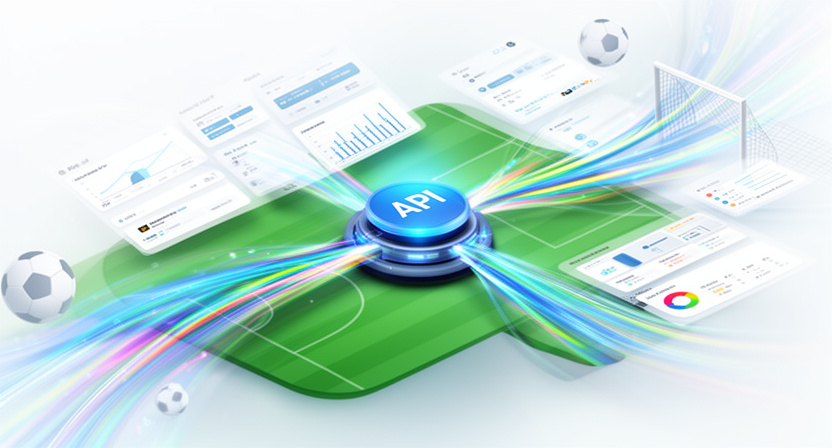
At a high level, a betting data API works by continuously monitoring and collecting data from various bookmakers. This raw data is then processed. It's cleaned, standardized, and mapped to a common schema. This means that odds for "Home Win" from Bet365 and "1" from William Hill are both represented consistently in the API's output.
When your application needs data, it sends an HTTP request to the API's endpoint. You typically include an API key for authentication. The API then responds with the requested data in a structured format, usually JSON. This allows your code to easily parse and use the information.
For example, to get a list of upcoming football events, you might hit an endpoint like /v1/football/events. To get the odds for a specific match, you'd then query /v1/football/events/{event_id}/odds.
Here's a simplified example of how you might request a list of bookmakers:
curl -X GET "https://api.ukoddsapi.com/v1/bookmakers" \
     -H "X-Api-Key: YOUR_API_KEY"
The API would then return a JSON response listing the supported bookmakers:
{
  "schema_version": "1.0",
  "count": 27,
  "bookmakers": [
    { "bookmaker_code": "UO001", "name": "10Bet", "type": "sportsbook", "region": "uk" },
    { "bookmaker_code": "UO002", "name": "Betfair Sportsbook", "type": "sportsbook", "region": "uk" },
    { "bookmaker_code": "UO027", "name": "William Hill", "type": "sportsbook", "region": "uk" }
  ],
  "note": "Example only — response is truncated."
}
This response provides unique bookmaker_code values and names. These codes are stable identifiers you can use in subsequent requests to filter or identify odds from specific providers.
Why a Betting Data API Matters for Developers
For developers and builders, a betting data API is a foundational tool. It removes the most significant hurdle: acquiring clean, up-to-date data from disparate sources. Instead of spending weeks building and maintaining scrapers, you can focus on your core product.
Consider these common use cases:
- Odds Comparison Platforms: Building a website or app that shows the best odds across multiple bookmakers for a given event. A UK bookmaker odds API with comprehensive coverage is essential here.
- Arbitrage Detection: Identifying "surebet" opportunities where different bookmakers' odds allow for a risk-free profit. This requires fast, accurate data from many sources.
- Predictive Modelling: Feeding historical and current odds into machine learning models to predict outcomes. Clean, structured data is critical for model training and inference.
- Automated Betting Bots: While often complex and requiring careful legal consideration, some developers build bots that react to specific odds movements or conditions.
- Data Engineering & Analytics: Creating robust data pipelines for in-depth analysis of betting markets, trends, and bookmaker behaviour.
The reliability and consistency of an API mean less debugging and more building. You get normalized data, stable endpoints, and often, support channels. This is a stark contrast to the constant cat-and-mouse game of web scraping.

Betting Data API Integration: Getting Pre-Match Football Odds JSON
Integrating a betting data API typically involves a few steps: authentication, fetching events, and then retrieving odds for specific events. The goal is to get that clean pre-match football odds JSON into your application.
Let's walk through a Python example using ukoddsapi.com to fetch upcoming football events and then their odds.
First, you need an API key. Store it securely, ideally as an environment variable.
import os
import requests

# Load your API key from environment variables
API_KEY = os.environ.get("UKODDSAPI_KEY", "YOUR_API_KEY") # Replace YOUR_API_KEY for testing
BASE_URL = "https://api.ukoddsapi.com"
headers = {"X-Api-Key": API_KEY}

# Step 1: Fetch upcoming football events for a specific date
try:
    events_response = requests.get(
        f"{BASE_URL}/v1/football/events",
        headers=headers,
        params={"schedule_date": "2026-04-25", "has_odds": "true", "per_page": "5"},
        timeout=30,
    )
    events_response.raise_for_status() # Raise an exception for HTTP errors
    events_data = events_response.json()

    if not events_data.get("events"):
        print("No events found with odds for the specified date.")
        exit()

    # Get the event_id of the first event
    first_event_id = events_data["events"][0]["event_id"]
    print(f"Found event: {events_data['events'][0]['home_team']} vs {events_data['events'][0]['away_team']} (ID: {first_event_id})")

    # Step 2: Fetch pre-match odds for that specific event
    odds_response = requests.get(
        f"{BASE_URL}/v1/football/events/{first_event_id}/odds",
        headers=headers,
        params={"package": "core", "odds_format": "decimal"},
        timeout=60,
    )
    odds_response.raise_for_status() # Raise an exception for HTTP errors
    odds_data = odds_response.json()

    print(f"\nOdds for {odds_data.get('event_title')}:")
    for market in odds_data.get("markets", []):
        print(f"  Market: {market['market_name']}")
        for selection in market.get("selections", []):
            print(f"    - {selection['selection_name']}: {selection['odds']} ({selection['bookmaker_code']})")

except requests.exceptions.RequestException as e:
    print(f"API request failed: {e}")
except ValueError as e:
    print(f"JSON decoding failed: {e}")
except Exception as e:
    print(f"An unexpected error occurred: {e}")
This Python snippet first hits the /v1/football/events endpoint to find upcoming matches with available odds. It then extracts the event_id from the first event found. With that event_id, it makes a second request to /v1/football/events/{event_id}/odds to retrieve the full pre-match football odds JSON for that specific fixture. The package=core parameter specifies the market coverage, and odds_format=decimal ensures you get decimal odds. The output then prints the event title and lists the odds for each selection across different bookmakers.
Common Mistakes When Working with Odds APIs
Even with a well-designed API, developers can run into common pitfalls. Knowing these can save you a lot of debugging time.
- Ignoring Rate Limits: APIs have limits on how many requests you can make in a given period. Hitting these limits will result in 429 Too Many Requests errors. Implement proper backoff and retry logic.
- Expecting In-Play Data from a Pre-Match API: Many developers search for "live odds" but actually need pre-match data. If your API is designed for pre-match, it won't provide real-time, in-play updates. Understand the API's scope.
- Poor Error Handling: Network issues, invalid parameters, or authentication failures can occur. Always wrap API calls in
try-exceptblocks and handle different HTTP status codes gracefully. - Not Normalizing Data (Internally): While the API provides normalized data, you might still need to map
selection_namevalues (e.g., "Home" vs. "Team A to Win") to your internal models. - Caching Inefficiently: Repeatedly requesting the same data can quickly deplete your quota. Implement a caching strategy for data that doesn't change frequently, such as event metadata or bookmaker lists. Odds, however, require more frequent refreshing.
- Misunderstanding Odds Formats: Odds can be decimal (2.50), fractional (6/4), or American (+150). Ensure your application correctly interprets the format provided by the API and converts it if necessary.
Comparison / Alternatives: Odds API Without Scraping
When you need betting data, you essentially have two main paths: building your own web scraper or using a dedicated betting data API. For most developers, a managed API is the clear winner for reliability and efficiency.
Here's a quick comparison:
| Feature/Approach | Managed Betting Data API (e.g., ukoddsapi.com) | Self-Built Web Scraper |
|---|---|---|
| Data Source | Aggregates from many bookmakers, normalized | Directly scrapes individual bookmaker websites |
| Reliability | High uptime, stable endpoints, maintained by provider | Fragile, breaks with website changes, constant maintenance |
| Data Format | Consistent JSON, easy to parse | HTML parsing, inconsistent structures, requires custom logic |
| Rate Limits | Defined limits, often generous for paid tiers, clear error responses | IP blocking, CAPTCHAs, stealth measures needed |
| Bookmaker Coverage | Centralized access to many bookmakers (e.g., 27 UK bookmakers on ukoddsapi.com Pro/Business) | Requires building a scraper for each bookmaker individually |
| Development Time | Quick integration, focus on your app logic | Significant initial build time, ongoing maintenance overhead |
| Cost | Subscription fee (free tiers available for testing) | Server costs, proxy costs, developer time (often higher total) |
| Legal/Compliance | Authorized access, usually within terms of service | Often violates terms of service, legal risks |
| Data Types | Pre-match odds, events, markets, specials, historical data (plan dependent) | Whatever you can extract from HTML, limited by scraping ability |
For anyone serious about building an application that relies on betting data, opting for an odds API without scraping is the pragmatic choice. It saves time, reduces risk, and provides a much more stable foundation for your project.
FAQ
What data formats do betting data APIs typically provide?
Most betting data APIs provide data in JSON (JavaScript Object Notation) format. This is a lightweight, human-readable format that is easy for applications to parse and process. Some APIs might also offer XML, but JSON is the industry standard for modern web services.
How often do odds update via an API?
The update frequency for pre-match odds varies by API provider and your subscription plan. For ukoddsapi.com, you can poll endpoints like /v1/football/events/{event_id}/odds to get refreshed snapshots of pre-match prices. While not "live" in the in-play sense, these updates are frequent enough for most pre-match comparison and analysis tools.
Can I get historical odds data?
Yes, some betting data APIs, including ukoddsapi.com on its Pro and Business tiers, offer access to historical odds data. This is crucial for backtesting betting strategies, training predictive models, and analyzing past market behavior. You typically query this data by specifying past dates or event IDs.
Is a betting data API suitable for real-time trading?
A betting data API providing pre-match odds is generally not suitable for real-time, sub-second trading that requires in-play data. "Real-time" in the context of pre-match APIs usually refers to regularly refreshed snapshots. For true in-play trading, you would need a dedicated streaming or WebSocket feed, which is a different product category.
What's the difference between a "core" and "full" package for odds?
API packages like "core" and "full" typically refer to the breadth of market coverage. A "core" package usually includes main markets like Match Winner (1X2). A "full" or "advanced" package expands this to include more niche markets such as corners, cards, player props, handicaps, and scorelines. Higher-tier subscriptions often grant access to these broader market packages.
Using a betting data API is the most efficient and reliable way for developers to access pre-match football odds JSON and other related data. It eliminates the headaches of web scraping, providing clean, normalized data through stable endpoints. This allows you to focus on building innovative applications, whether that's an odds comparison site, an arbitrage finder, or a data analysis platform.
Ready to integrate? Explore the API documentation and get started with UK Odds API today.