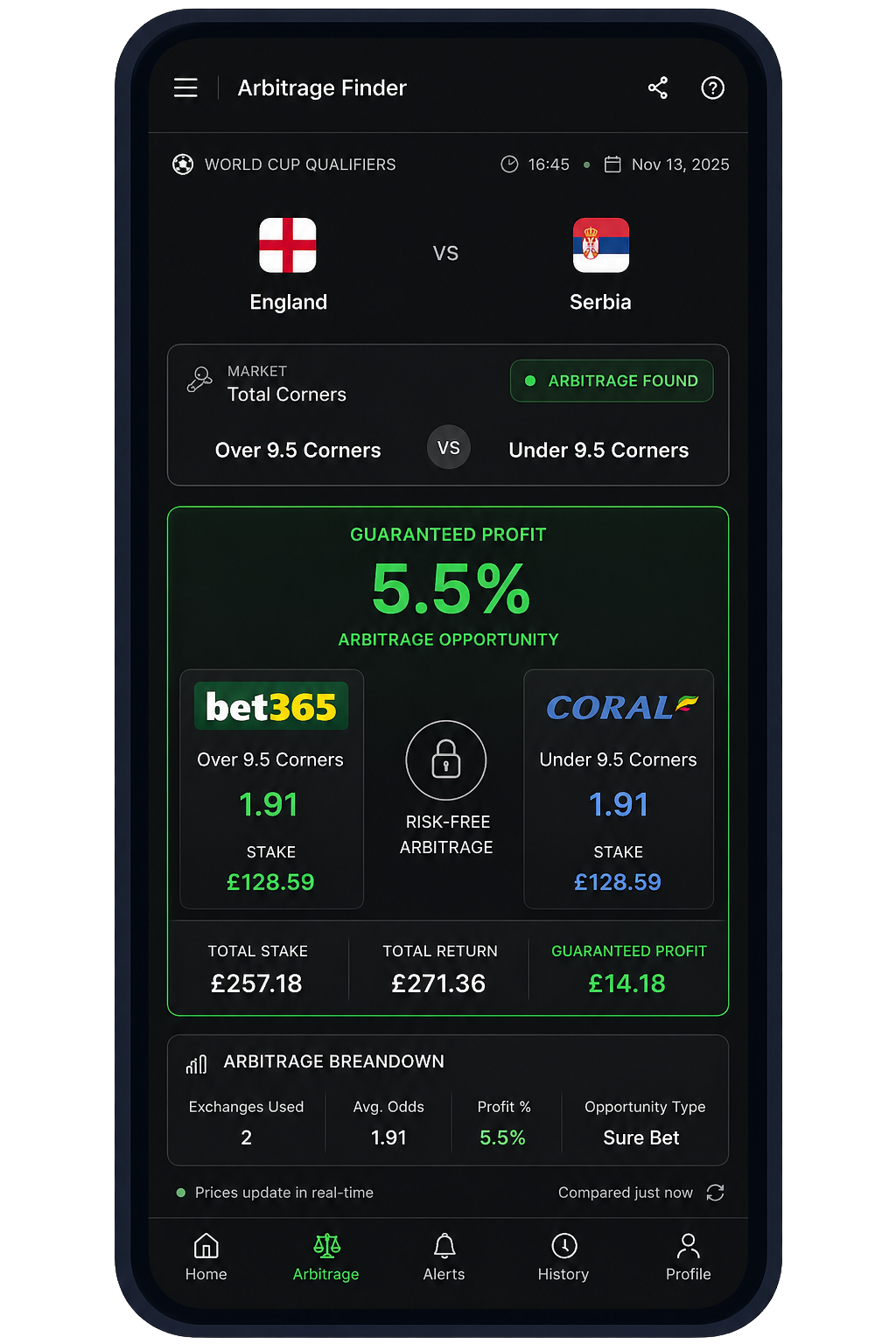
A player props API delivers specific pre-match odds related to individual player performance in an upcoming match. Think "Harry Kane to score anytime" or "Mohamed Salah to have 2+ shots on target." For developers, this means programmatic access to granular betting markets that go beyond simple match winner or total goals. Integrating a reliable player props API allows you to build sophisticated applications, from fantasy sports tools to advanced betting models, without the headache of scraping constantly changing bookmaker websites.
This data is crucial for anyone building a product that needs detailed football market information. Instead of manually checking various UK bookmaker odds API sources, a single integration provides structured pre-match football odds JSON. This approach saves development time and avoids the rate limits and IP blocks that come with trying to get this data via scraping. Understanding what is a player props API and how to integrate it is key to unlocking these advanced betting markets for your projects.
What is a Player Props API?
A player props API is a service that provides structured data for "proposition bets" focused on individual player actions in a sports event. Unlike traditional bets on match outcomes, player props allow you to wager on specific statistical achievements or events involving a particular player. For football, this includes markets like a player to score, assist, get a card, have a certain number of shots, or even make a specific number of passes.
This type of API offers a programmatic way to access these odds, usually in a standardised JSON format. Instead of manually navigating bookmaker websites to find these niche markets, developers can query an endpoint and receive all available odds for a given player across multiple bookmakers. This makes it possible to automate data collection for analysis, build custom dashboards, or power betting tools. The key benefit is getting consistent, machine-readable data for these highly specific pre-match markets.

The data provided by a player props API is always pre-match. This means the odds are for events scheduled to happen before the match kicks off. They are not "live" or "in-play" odds, which update during the game. The API provides snapshots of these odds as published by bookmakers, which can be refreshed at regular intervals to ensure you have the most up-to-date pre-match prices. This distinction is vital for developers building applications that rely on stable, scheduled data points rather than real-time, sub-second updates.
How Player Props APIs Work
A player props API acts as an aggregator and normaliser. It collects data from numerous bookmakers, extracts the relevant player proposition markets, and then presents them through a unified API endpoint. This process involves several steps:
- Data Collection: The API provider continuously gathers odds data from a wide range of sportsbooks. This often involves complex scraping infrastructure or direct data feeds from bookmakers.
- Normalization: Raw data from different bookmakers comes in various formats. The API normalises this, mapping different bookmaker names for the same player or market to a single, consistent identifier. This ensures that "Harry Kane to Score" from Bet365 is treated the same as "H. Kane Anytime Goalscorer" from William Hill.
- Structuring: The normalised data is then structured into a clean, machine-readable format, typically JSON. This JSON includes details like the event ID, market name (e.g., "Player to Score Anytime"), selection name (e.g., "Harry Kane"), and the odds offered by each bookmaker.
- API Endpoint: Developers access this structured data via RESTful API endpoints. You send an HTTP request to a specific URL, often including parameters like
event_id,market_group, orplayer_name, and the API returns the requested data.
Here's a simplified example of what a JSON response for player prop odds might look like within an event's markets:
{
"event_id": "EV0012345",
"event_title": "Tottenham vs Arsenal",
"kickoff_utc": "2026-04-29T14:00:00Z",
"markets": [
{
"market_id": "MKT001",
"market_name": "Match Winner",
"market_group": "main",
"selections": [
{"selection_name": "Tottenham", "odds": [{"bookmaker_code": "UO001", "odds": 2.50}]},
{"selection_name": "Draw", "odds": [{"bookmaker_code": "UO001", "odds": 3.40}]},
{"selection_name": "Arsenal", "odds": [{"bookmaker_code": "UO001", "odds": 2.80}]}
]
},
{
"market_id": "MKT005",
"market_name": "Player to Score Anytime",
"market_group": "scorer",
"selection_count": 3,
"selections": [
{
"selection_name": "Harry Kane",
"line": null,
"odds": [
{"bookmaker_code": "UO001", "odds": 1.80, "status": "active"},
{"bookmaker_code": "UO027", "odds": 1.75, "status": "active"}
]
},
{
"selection_name": "Son Heung-min",
"line": null,
"odds": [
{"bookmaker_code": "UO001", "odds": 2.50, "status": "active"},
{"bookmaker_code": "UO027", "odds": 2.40, "status": "active"}
]
}
]
}
],
"note": "Example only — response is truncated."
}
This JSON snippet shows how a "Player to Score Anytime" market might appear, nested within the markets array for a specific football event. Each player is a selection, with their respective odds from different bookmakers. This structured format is what enables efficient player props API integration into your applications.
Why Player Props Data Matters for Developers
For developers, access to player props data opens up a new dimension of application building. Traditional match odds are useful, but player-specific markets allow for much more granular analysis and product features. Here’s why this data is valuable:
- Advanced Prediction Models: If you're building machine learning models for sports outcomes, player statistics are critical inputs. A player props API provides the market's view on these individual performances, which can be used to train or validate your models. For example, predicting a player's likelihood to score based on historical data and then comparing it to current API odds.
- Fantasy Sports Tools: Many fantasy football games rely on player performance metrics. Integrating player props data can help users identify undervalued players, compare their own projections against bookmaker odds, or even suggest optimal lineups.
- Odds Comparison and Arbitrage: While less common for props due to lower liquidity, developers can build tools to compare player prop odds across multiple UK bookmakers. This helps users find the best price for a specific player outcome or, in rare cases, identify arbitrage opportunities where a profit can be made regardless of the outcome.
- Content Generation and Dashboards: For sports content sites or personal dashboards, displaying player props alongside match odds offers richer information. You can create dynamic widgets showing "top goalscorer odds" for an upcoming match or "player to be carded" markets.
- Data Engineering Pipelines: For data scientists and engineers, a player props API provides a clean, consistent data source for building robust data pipelines. This eliminates the need for maintaining complex scraping infrastructure, which is prone to breaking due to website changes.

For developers focused on the UK bookmaker odds API landscape, player props are particularly relevant. UK bookmakers offer a vast array of these markets, especially for popular leagues like the Premier League. Having a single source for this data, rather than trying to aggregate it from individual sites, is a significant advantage. It ensures you get comprehensive coverage without the hassle of managing multiple integrations or dealing with anti-bot measures.
Integrating a Player Props API
Integrating a player props API typically involves a few steps: obtaining an API key, making HTTP requests to specific endpoints, and parsing the JSON response. For ukoddsapi.com, player props are part of the advanced markets available on higher tiers (Pro and Business plans). This means you'll need to specify the package=full parameter when requesting odds to access these granular markets.
Here's a Python example demonstrating how to fetch pre-match football events and then retrieve full odds, including player props, for a specific event using ukoddsapi.com.
First, ensure you have your UKODDSAPI_KEY set as an environment variable.
import os
import requests
import json
API_KEY = os.environ.get("UKODDSAPI_KEY", "YOUR_API_KEY") # Use YOUR_API_KEY for testing
BASE = "https://api.ukoddsapi.com"
headers = {"X-Api-Key": API_KEY}
# Step 1: Fetch upcoming football events with odds
print("Fetching upcoming football events...")
events_response = requests.get(
f"{BASE}/v1/football/events",
headers=headers,
params={"schedule_date": "2026-04-29", "has_odds": "true", "per_page": "10"},
timeout=30,
)
events_response.raise_for_status() # Raise an exception for HTTP errors
events_data = events_response.json()
if not events_data.get("events"):
print("No events found with odds for the specified date.")
exit()
# Choose the first event found
event_id = events_data["events"][0]["event_id"]
event_title = events_data["events"][0]["home_team"] + " vs " + events_data["events"][0]["away_team"]
print(f"Found event: {event_title} (ID: {event_id})")
# Step 2: Fetch full odds for the selected event, including advanced markets (like player props)
print(f"Fetching full odds for {event_title}...")
odds_response = requests.get(
f"{BASE}/v1/football/events/{event_id}/odds",
headers=headers,
params={"package": "full", "odds_format": "decimal"}, # 'full' package for advanced markets
timeout=60,
)
odds_response.raise_for_status()
odds_data = odds_response.json()
# Step 3: Parse and display player prop markets
print(f"\nPlayer Prop Markets for {odds_data.get('event_title')}:")
player_prop_found = False
for market in odds_data.get("markets", []):
if market.get("market_group") == "scorer" or "player" in market.get("market_name", "").lower():
print(f" Market: {market['market_name']} (ID: {market['market_id']})")
for selection in market.get("selections", []):
player_name = selection.get("selection_name")
player_odds = ", ".join([f"{o['bookmaker_code']}: {o['odds']}" for o in selection.get("odds", [])])
print(f" - {player_name}: {player_odds}")
player_prop_found = True
if not player_prop_found:
print(" No specific player prop markets found in the 'full' package for this event (or example data does not contain one).")
This Python snippet first retrieves a list of upcoming football events. Then, it uses the event_id of the first event to fetch its full odds. The crucial part is params={"package": "full", ...}, which tells the API to include advanced markets like player props. Finally, the code iterates through the returned markets, specifically looking for market_group "scorer" or market names containing "player" to identify and display player-specific odds. This demonstrates a practical player props API integration for football data. For more details on available markets and endpoints, consult the ukoddsapi.com API reference.
Common Mistakes When Using Player Props Data
Working with player props data can be tricky. Developers often encounter specific challenges that can lead to incorrect data or broken applications. Here are some common mistakes and how to avoid them:
- Ignoring Data Freshness: Player prop odds can change frequently, especially closer to kickoff. Relying on stale data can lead to inaccurate predictions or comparisons. Fix: Implement a sensible polling strategy to refresh data regularly, but respect API rate limits. For ukoddsapi.com, this means understanding your plan's requests per hour.
- Mismatched Player Names: Bookmakers might use slightly different spellings or abbreviations for players (e.g., "M. Salah" vs. "Mohamed Salah"). If your application doesn't normalise these, you might miss odds for the same player. Fix: Use the consistent
selection_nameprovided by the API and implement your own fuzzy matching or canonical player ID mapping if integrating multiple raw sources. - Market Variation and Scope: Not all bookmakers offer the exact same player prop markets. Some might have "Player to Score 2+ Goals" while others only have "Anytime Goalscorer." Assuming universal market availability across all bookmakers is a mistake. Fix: Check the
market_nameandmarket_groupfields in the API response to confirm market availability before trying to access specific player props. - Hitting Rate Limits: Aggressively polling for every player prop market across numerous events can quickly exhaust your API request quota. Fix: Design your data fetching strategy carefully. Request data only when needed, cache responses locally, and use pagination (
per_page) where available. - Misinterpreting Odds Formats: Odds can be decimal, fractional, or American. If your application expects one format but receives another, calculations will be wrong. Fix: Always specify the
odds_formatparameter (e.g.,odds_format=decimal) in your API requests and ensure your parsing logic matches. - Lack of Error Handling: Network issues, invalid API keys, or rate limit breaches can cause API requests to fail. Ignoring these can lead to silent data corruption or application crashes. Fix: Implement robust error handling, including retries with exponential backoff for transient errors, and clear logging for debugging.
Player Props API vs. Scraping: A Comparison
When developers need player props data, the primary choices are usually a dedicated API or building a custom web scraper. Each approach has distinct advantages and disadvantages. For reliable, structured pre-match football odds JSON, an API generally offers a more robust solution, especially for those looking for an odds API without scraping.
Here's a comparison:
| Feature | Player Props API (e.g., ukoddsapi.com) | Custom Web Scraping |
|---|---|---|
| Data Reliability | High. Managed by provider, consistent format, less prone to breaking. | Low. Breaks frequently due to website layout changes, anti-bot measures. |
| Setup Time | Fast. Register, get API key, read docs, start coding. | Slow. Requires identifying HTML elements, handling CAPTCHAs, proxies, rate limits. |
| Maintenance | Low. Provider handles updates when bookmaker sites change. | High. Constant debugging and re-coding as sites evolve. |
| Data Format | Standardised JSON. Easy to parse and integrate. | Raw HTML. Requires complex parsing logic, often inconsistent. |
| Rate Limits | Clearly defined and managed. Higher tiers offer generous limits. | Undefined. IP blocks, CAPTCHAs, and temporary bans are common. |
| Bookmaker Coverage | Centralised access to many UK bookmakers via one integration. | Requires separate scraper for each bookmaker, increasing complexity. |
| Cost | Subscription fee (free tier available for testing). | Hidden costs: proxy services, CAPTCHA solvers, developer time. |
| Scalability | Built for scale. High request volumes handled by provider's infrastructure. | Difficult to scale. Requires distributed scraping, proxy rotation, error handling. |
For most developers, especially those building commercial applications or relying on consistent data, a dedicated player props API is the more efficient and reliable choice. It allows you to focus on building your product rather than fighting with web scraping infrastructure.

FAQ
What kind of player prop markets can I expect from an API?
A player props API typically covers markets like "Player to Score Anytime," "Player to Score First/Last," "Player to Get a Card," "Player to Have X Shots on Target," or "Player to Make X Assists." The exact markets vary by bookmaker and API package.
Is player props data available for all football leagues?
Coverage depends on the API provider and their bookmaker sources. For ukoddsapi.com, the focus is on UK bookmakers, which means extensive coverage for major European football leagues like the Premier League, La Liga, Serie A, and Champions League, where player props are common.
How often is player props data updated via an API?
Pre-match player prop odds are typically updated at regular intervals, often every few minutes or as bookmakers adjust their lines. This provides fresh snapshots of the odds before kickoff. It's not a real-time "in-play" feed, but rather refreshed pre-match data.
Can I get historical player props data through an API?
Some advanced API plans, like ukoddsapi.com's Pro and Business tiers, offer access to historical odds data, which can include player props. This is valuable for backtesting betting models or conducting long-term player performance analysis.
What are the main benefits of using an API over scraping for player props?
Using an API provides reliable, structured, and normalised data without the maintenance burden of web scraping. It avoids IP blocks, CAPTCHAs, and constant code updates, allowing developers to focus on building features rather than data collection infrastructure.
Accessing player props data programmatically is a game-changer for developers building sophisticated sports applications. It provides the granular detail needed for advanced analytics, fantasy tools, and bespoke betting models, all delivered in a clean, reliable JSON format. By choosing a dedicated API solution, you bypass the inherent challenges of web scraping and gain a stable foundation for your projects.
To explore how to integrate pre-match football odds, including advanced player prop markets, into your applications, visit ukoddsapi.com.